Blog

create a 1080 x 1080 instagram poster wi 7p8JJbttRyu7JTxPC6YmLQ p hOv OpQQ6SgjqHb7T Tw

Major festivals of India in 2026: State-Wise Guide with Dates & Cultural Significance

Introduction – Best Guide to India’s Festival Celebrations India is a land of spectacular color, deep tradition, spiritual richness, and diverse communities. The Major festivals of India represent not just dates on a calendar, but living heritage that unites millions. From joyful celebrations to introspective traditions, the Major festivals of India showcase centuries of culture, myth, art, music, and togetherness. In 2026, festival planners, families, and travel lovers will witness a truly unforgettable year of celebrations. In this blog, we will explore the Major festivals of India by states, share key dates in the 2026 calendar, explain their cultural importance, and provide practical insights for travelers and cultural enthusiasts alike. What Makes the Major Festivals of India Special? The Major festivals of India are powerful expressions of: Whether you’re celebrating Holi in Mathura, Durga Puja in Kolkata, or Diwali across the nation, Indian festivals make every moment special. 🇮🇳 National Calendar – Major Festivals in India (2026) Below is the festival road map for the Major festivals of India in 2026, including important holiday dates: Festival/Event 2026 (Date) Significance Makar Sankranti / Pongal Jan 14 Harvest celebration Republic Day Jan 26 National pride Maha Shivratri Feb 16 Worship of Lord Shiva Holi Mar 4 Festival of colors Ram Navami Mar 26 Birth of Lord Rama Mahavir Jayanti Mar 31 Jain celebration Good Friday Apr 3 Christian observance Buddha Purnima May 1 Buddha’s birth Rath Yatra Jul 16 Odisha chariot festival Raksha Bandhan Aug 28 Sibling festival Janmashtami Sep 4 Birth of Lord Krishna Ganesh Chaturthi Sep 14 Lord Ganesh festival Navratri Oct 11–20 Worship of Goddess Durga Dussehra / Vijayadashami Oct 20 Good over evil Diwali / Deepavali Nov 8 Festival of lights Guru Nanak Jayanti Nov 24 Sikh celebration Christmas Dec 25 Global holiday These are India’s most celebrated events, enriched further by unique state traditions. State-Wise Major Festivals of India – 2026 Guide 1. Uttar Pradesh – Sacred & Serene Uttar Pradesh hosts some of the most iconic Major festivals of India, including: • Holi – Mar 4, 2026 Mathura and Vrindavan transform into vibrant hubs of color, devotional music, and joyful traditions. • Ram Navami – Mar 26, 2026 Ayodhya holds grand celebrations honoring Lord Rama. • Magh Mela – Jan 3–Feb 15, 2026 A massive holy gathering in Prayagraj with sacred dips and spiritual discourses. • Diwali – Nov 8, 2026 The entire state glows, especially Ayodhya, with lamp-lighting ceremonies and cultural events. Uttar Pradesh remains a spiritual heartland with deep-rooted rituals and festival traditions. 2. Maharashtra – Land of Ganesh & Community Celebrations • Ganesh Chaturthi – Sep 14, 2026 Massive pandals, processions, and cultural performances fill Mumbai and Pune. • Gudi Padwa – Mar 19, 2026 Celebrated as the Marathi New Year with traditional rituals. • Holi & Diwali Statewide celebrations add charm with regional customs. Maharashtra’s cultural energy and street festivities attract millions. 3. West Bengal – Durga Puja Glory • Durga Puja – Mid-October 2026 The most artistic celebration in India, filled with handcrafted pandals, cultural shows, and devotional rhythms. • Kali Puja – Nov 8, 2026 A deeply spiritual night aligning with Diwali. • Rath Yatra – Jul 16, 2026 Shared spiritual traditions with Odisha. Durga Puja stands as one of India’s grandest cultural spectacles. 4. Gujarat – Navratri Dance & Cultural Brilliance • Navratri – Oct 11–20, 2026 Ten nights of Garba, Dandiya, and devotion. • Diwali – Nov 8, 2026 Homes and markets glow with lights and festivities. • Rann Utsav – Until Mar 4, 2026 A cultural festival in the White Desert. Gujarat radiates tradition and energy throughout the year. 5. Karnataka – Royal Heritage & Dasara • Mysore Dasara – Oct 4–12, 2026 Famous for the illuminated Mysore Palace and cultural parades. • Ugadi – Mar 19, 2026 The Kannada New Year with rituals and festive foods. Karnataka’s celebrations combine royal heritage and spiritual culture. 6. Tamil Nadu – Temple Traditions & Harvest Joy • Pongal – Jan 15, 2026 A four-day harvest celebration with kolam art, feasts, and prayers. • Tamil New Year – Apr 14, 2026 A day of gratitude and cultural renewal. • Navratri & Vijayadashami Famous for Golu displays and temple events. Tamil Nadu highlights India’s ancient cultural roots. 7. Andhra Pradesh & Telangana – Tradition & Festive Warmth • Sankranti – Jan 14, 2026 A major harvest celebration with kites, rangoli, and cultural rituals. • Ugadi – Mar 19, 2026 The Telugu New Year. These states combine tradition with vibrant community celebrations. 8. Odisha – Home of Jagannath & Chhath Devotion • Rath Yatra – Jul 16, 2026 One of the largest chariot festivals globally, drawing millions to Puri. • Chhath Puja – Late Oct/Nov 2026 Dedicated to the Sun God with strong devotional practices. Odisha’s celebrations are deeply spiritual and culturally rich. 9. Punjab & Haryana – Harvest & Community Joy • Baisakhi – Apr 14, 2026 Marking the Sikh New Year and harvest season. • Lohri – Jan 13, 2026 Celebrated with bonfires, folk songs, and traditional snacks. These northern states preserve India’s agricultural and cultural essence. 10. Kerala – Onam Beauty & Vishu Tradition • Onam – Aug 26, 2026 Boat races, flower carpets, feasts, and dances mark this iconic celebration. • Vishu – Apr 14, 2026 A festival of blessings and new beginnings. Kerala’s celebrations blend nature, culture, and spirituality. 11. Goa & Northeast India – Fusion of Culture • Christmas – Dec 25, 2026 (Goa) Goa comes alive with midnight masses, lights, and music. • Hornbill Festival – Dec 2026 (Nagaland) A celebration of tribal identity, food, and art. These regions bring refreshing diversity to India’s cultural calendar. Planning Your Year Around the Major Festivals of India Because the Major festivals of India are spread throughout the calendar, here are tips for meaningful travel and content planning:✔ Check precise local calendars — regional traditions may shift dates slightly.✔ Book accommodations well in advance for peak festivals like Holi, Diwali, and Rath Yatra.✔ Respect local customs and

Major festivals of India in 2026: State-Wise Guide with Dates & Cultural Significance Read More »

digiphlox bog creative001

How to Choose the Right CMS Platform for Your Business Website

Building a website for your business can be an exciting venture but one step that is often ignored is selecting the correct CMS. Once you make your website , you utilize a CMS to manage it . CMS = Content Management System . Looking to add a new service? Blog something? Modify some text? Upload an image? A good CMS makes these things easy to do. The difficulty is that there are so many choices out there today. WordPress, Shopify, Wix, Webflow and bespoke CMS platforms each have their own perks. So how can you know which one is correct for your business? At Digiphlox we think that the answer begins with your business, not the CMS. There is no particular platform that works well for everyone. The proper decision relies on what you want your website to do, how you plan to manage it and where you want your business to go in future. Let’s have a look at what really counts when choosing a CMS for your business website.  What Is a CMS? A Content Management System is a platform that allows you to maintain your website without having to write code every time you want to make a little update. For example, if you own a business website and want to publish a new blog, update your contact details, or add a new service, you can typically do it using your CMS dashboard. Imagine it as your website’s control room. The most popular CMS’s are WordPress, Wix, Webflow and Shopify. There are custom CMS solutions tailor-made for enterprises with special needs.  Why Does Your CMS Choice Matter? You might be thinking, “I’ll just grab a popular CMS and get started.” Fair enough, but your CMS may influence so much more than just how you edit your website. It can impact your website’s speed, SEO, security, maintenance, content management and even the ease of adding new features later down the line. Imagine paying for a website today and then 6 months later finding that adding a crucial feature is difficult or expensive. That’s the predicament you don’t want to be in. Selecting the appropriate CMS early on will save you money, time, and a ton of frustration later.  Before you start comparing CMS platforms, take a step back and think about what your business actually needs. Here are the questions we recommend asking. 1. What Do You Want Your Website to Do? Start with what your website does. Are you seeking to create leads? Selling products? Receive phone calls? Market your services? Create educational content? Build your brand. For instance, a local digital marketing agency could require service sites, blogs, lead forms, case studies, and good SEO capabilities. The requirements of an online clothes company are very different. This may include product listing, payment methods, inventory management, customer accounts and order tracking. Both firms need a website but they don’t necessarily need the same CMS . So just because “everyone is on it” doesn’t necessarily mean it is the ideal platform to choose.  2. Who Will Manage the Website? This is something that firms often overlook to take into account. The developer passes you your website – it’s not done. Somebody will have to run it. Perhaps your marketing team writes blogs. Your sales team might need to update information. Someone may need to add new products or update pricing. If every little update requires a developer, it can rapidly become a headache to maintain the website. Find a CMS that your team can use easily in their day to day work.  3. Don’t Ignore SEO If you want people to be able to locate your business on Google, you need to think about SEO from day one. Your CMS should give you control over critical SEO factors like page names, meta descriptions, URLs, headings, picture alt text, internal links and structured data. It should also be able to get along with Google Search Console and Google Analytics. And a CMS won’t instantly get your website to rank on Google. Even with good rankings, you still need meaningful content, technical SEO, website performance, authority and many other variables. But your CMS should provide you with the tools you need to successfully implement your SEO plan.  4. Think About Website Speed Wait, waiting for a website to load? Nobody likes that. Your CMS is one piece of the puzzle for website performance, but the platform isn’t the only thing involved. Choice of hosting, pictures, plugins, themes, scripts and the method a website is designed can all make a difference. When choosing your CMS, consider how easy it will be to keep your website running fast as you add additional pages and features. This is especially critical if you plan to do SEO campaigns or paid advertising. You don’t want to pay to send people to a website that delivers them a bad experience.  5. Take Security Seriously You shouldn’t wait until something has gone wrong to consider website security. Different CMS platforms demand different levels of maintenance. Some need core system updates, plugins and themes changes on a regular basis. Hosted platforms may handle more of the technological infrastructure for you.  Before choosing a CMS, find out: A secure website needs regular attention, regardless of which CMS you choose. 6. Will the CMS Grow With Your Business? Today, maybe your site is simple. Maybe you have 5 service pages, an About page and a contact form. But what about next year? You might introduce new services. You might start blogging. You might extend to another city. You might establish an online store. You might add new functionality. That’s where scalability comes in. You don’t have to develop the most sophisticated website imaginable on day one. All you have to do is make sure that the CMS will not become a problem when your organization expands.  7. Look Beyond the Initial Price A CMS may look inexpensive when you first compare platforms, but that’s not the whole story. Think

How to Choose the Right CMS Platform for Your Business Website Read More »

digiphlox blog creative 1

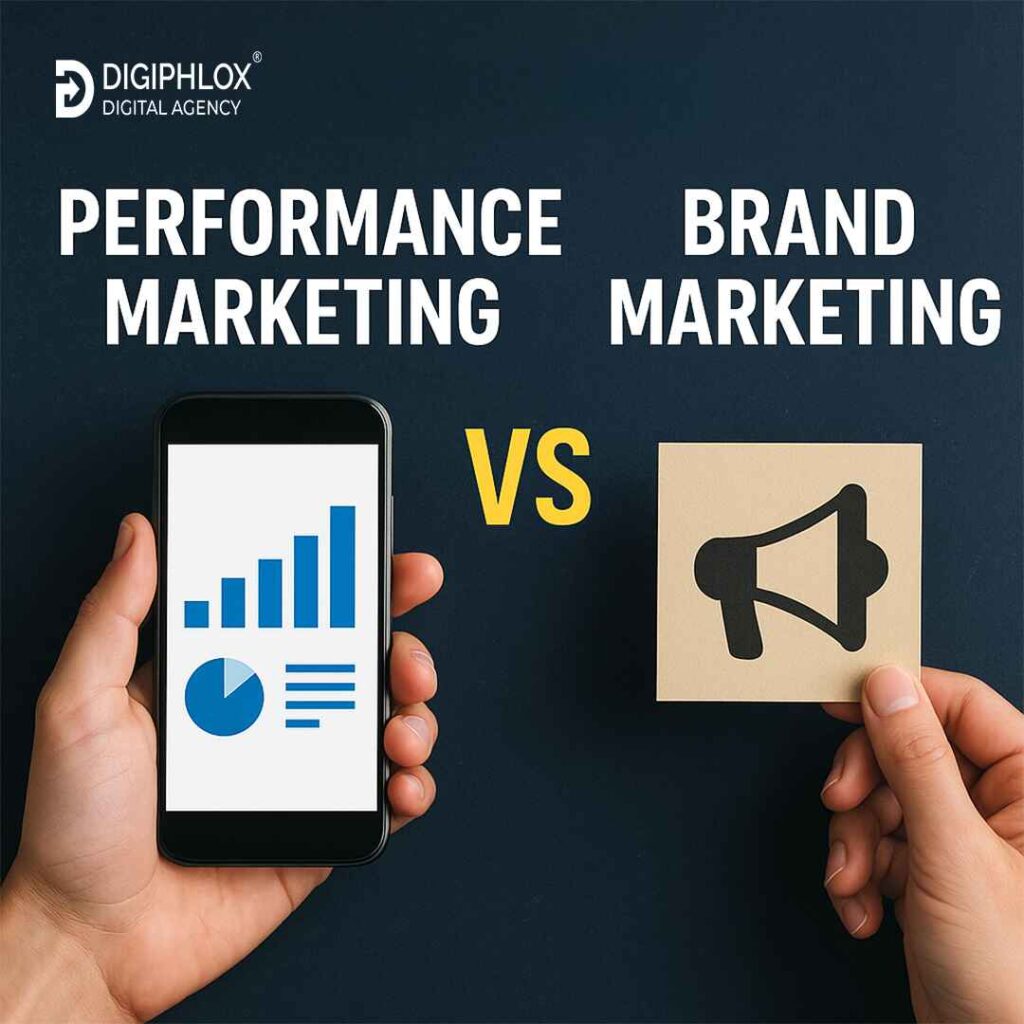
Performance Marketing vs Brand Marketing – What’s Better for You?

In today’s competitive digital world, every business wants two things — visibility and results. But when it comes to achieving these goals, marketers often face a common question: Should I focus on Performance Marketing or Brand Marketing? Both approaches play a crucial role in a company’s growth. However, understanding their key differences and how they complement each other is the secret to building a strong, sustainable marketing strategy.In this blog, we’ll break down the Performance Marketing vs Brand Marketing debate — what they are, how they work, their pros and cons, and which one fits your business better. What Is Performance Marketing? Performance Marketing is a data-driven strategy where you pay only when specific results are achieved — such as a click, lead, sale, or sign-up. It’s all about measurable, short-term results. This marketing method focuses on immediate performance and return on investment (ROI). Businesses can see exactly what works and what doesn’t, making it ideal for campaigns that aim to drive quick growth. Popular Channels Used in Performance Marketing: Example: If a fitness brand runs Facebook ads promoting its gym membership, and only pays when someone signs up, that’s Performance Marketing. The focus is on tangible outcomes like conversions or leads. What Is Brand Marketing? Brand Marketing is about building a lasting emotional connection between your business and your audience. It focuses on how people feel about your brand, rather than just getting them to take immediate action. The goal is to create awareness, trust, and loyalty — positioning your business as a reliable, recognizable name over time. Key Brand Marketing Activities: Example: Think of Nike, Apple, or Coca-Cola. Their ads don’t just promote products; they sell an idea, a lifestyle, and a feeling. That’s Brand Marketing in action — it focuses on emotions and long-term relationships. Performance Marketing vs Brand Marketing: Key Differences Aspect Performance Marketing Brand Marketing Goal Drive immediate sales, leads, or conversions Build trust, loyalty, and long-term recognition Time Frame Short-term (weeks or months) Long-term (months or years) Measurement ROI, clicks, conversions, cost-per-acquisition Brand awareness, sentiment, audience reach Budget Focus Measurable results and return Long-term storytelling and engagement Approach Data-driven and tactical Emotional and creative Outcome Direct revenue impact Strong market positioning and loyalty When we talk about Performance Marketing vs Brand Marketing, it’s not about which one is better — it’s about understanding their strengths and using them strategically. Advantages of Performance Marketing When to Use Performance Marketing: If your business needs immediate sales, measurable ROI, and fast growth, performance marketing is your go-to strategy. Advantages of Brand Marketing When to Use Brand Marketing: If you want to establish authority, gain long-term trust, and strengthen your reputation, brand marketing is essential. Combining Performance Marketing and Brand Marketing Rather than choosing one, smart businesses combine both. The Performance Marketing vs Brand Marketing approach doesn’t have to be a battle — it can be a partnership. Here’s how they work together effectively: Example: A real estate agency can run Google Ads to capture leads (performance marketing) while posting high-quality stories, client testimonials, and brand videos (brand marketing) to build trust. This balance ensures you’re not just chasing numbers but also nurturing a loyal audience that stays with you. How to Balance Both Strategies Finding the right mix of Performance Marketing vs Brand Marketing depends on your goals, budget, and business maturity. Here’s how to get started: Over time, brand strength will improve your performance campaigns — and successful campaigns will fund more brand-building efforts. Conclusion When comparing Performance Marketing vs Brand Marketing, remember that neither is inherently better — they’re just different tools for different objectives. Performance marketing gives you fast, measurable success. Brand marketing gives you credibility and staying power. The real magic happens when you combine both — quick wins backed by a strong, trusted name. Want to experience the perfect balance of performance and brand growth?Partner with Digiphlox — your trusted digital marketing agency that blends creative branding with data-driven performance to deliver real, lasting results.

Performance Marketing vs Brand Marketing – What’s Better for You? Read More »

Digiphlox poster

Local SEO for Small Business : How to Attract Customers Near You

Introduction In today’s competitive digital landscape, local SEO for small business has become one of the most effective ways to reach nearby customers. People no longer rely only on word of mouth; instead, they search on Google using terms like “best salon near me” or “restaurant in Ramnagar.” For a small business, this presents a golden opportunity. Focusing on Local SEO allows you to improve visibility, build reliability, and reach more customers around you. In this blog, we’ll explain what Local SEO is, why it’s important, and the exact strategies that make it work. And remember: Creating a Google Business Profile is not enough—it also needs to rank well on Google. For that, you can rely on Digiphlox. What is Local SEO for Small Business? Local SEO for small business means enhancing your digital presence so that potential customers in your area can easily find you in search results. Where global SEO targets audiences worldwide, Local SEO focuses on local queries like ‘café in Nainital’ or ‘plumber near me.” For small businesses, Local SEO creates equal opportunities in the market. Even if you don’t have a huge advertising budget, you can compete with larger companies by showing up in local search results when it matters most. Why Local SEO Matters for Small Business Users looking for businesses nearby are typically ready to purchase. Someone typing “digital marketing agency near me” is actively looking for services. Local SEO helps your business appear on Google Maps and in the “local pack” (the top 3 results with a map). A business with strong local presence, reviews, and accurate information instantly appears more trustworthy. Most local searches happen on mobile. Optimizing for local SEO for small business ensures you capture this audience. Flyers, banners, or local newspapers are costly and short-lived. Local SEO, on the other hand, is cost-effective and delivers long-term results by keeping you visible to potential customers every day. Proven Strategies in Local SEO for Small Business 1. Optimize Your Google Business Profile A complete and optimized Google Business Profile (GBP) is the backbone of Local SEO. Add accurate business details, categories, photos, and updates. But remember: Creating a Google Business Profile is not enough—it also needs to rank well on Google. For that, you can rely on Digiphlox. 2. Ensure NAP Consistency NAP = Name, Address, Phone number. Make sure these details are exactly the same across your website, social media, and directories. Inconsistencies hurt your ranking and confuse search engines. 3. Collect and Manage Reviews Reviews influence both search ranking and customer decisions. Encourage happy clients to leave Google reviews and always respond professionally. Pro Tip: Offer small incentives like discounts or loyalty points to motivate customers to review your services. This not only improves your SEO but also builds a loyal customer base. 4. Optimize Your Website with Local Keywords Your website represents the online identity of your small business. Use location-based keywords and highlight your services clearly. Examples: By weaving local SEO for small business into your content naturally, you’ll attract the right audience at the right time. 5. Mobile-Friendly Website Small businesses benefit greatly from a fast, mobile-friendly site. Since most local searches are done on smartphones, your site must load fast and be easy to navigate. Include click-to-call buttons and location maps so users can reach you quickly. 6. Build Local Citations Citations (mentions of your NAP on directories) are a strong ranking factor. Add your business to trusted sites like Justdial, IndiaMart, and local directories. Each citation increases your credibility in Google’s eyes. 7. Social Media Engagement Social platforms help boost local reach. Share updates, promotions, and local news. Use hashtags like #RamnagarBusiness or #LocalSEOforSmallBusiness to attract nearby audiences. Also, tag your location in posts and encourage customers to check in at your business—this creates valuable user-generated content that boosts visibility. 8. Location-Specific Pages If your small business serves multiple areas, create unique location pages on your website. Each page should target a specific city or region with relevant keywords. This ensures that whether someone searches “café in Haldwani” or “salon in Ramnagar,” your business appears as a strong contender. Common Mistakes Small Businesses Make in Local SEO How Digiphlox Helps Small Businesses with Local SEO At Digiphlox, we understand the unique challenges small businesses face. Our team specializes in local SEO for small business, ensuring that your Google Business Profile ranks, your website is optimized for local searches, and your brand gains visibility in your area. We focus on: With Digiphlox, your small business doesn’t just appear online—it stands out and attracts the right customers. Conclusion For small businesses, local SEO is not just an option—it’s a necessity. By optimizing your Google Business Profile, managing reviews, ensuring NAP consistency, and targeting the right keywords, you can attract customers near you and grow your brand locally. And don’t forget: Creating a Google Business Profile is not enough—it also needs to rank well on Google. For that, you can rely on Digiphlox. With local SEO for small business, you’ll have a competitive edge, increased visibility, and a steady flow of nearby customers walking into your store or contacting you online.

Local SEO for Small Business : How to Attract Customers Near You Read More »

ChatGPT Image Sep 5 2025 11 53 44 AM min 1 1

10 Proven Ways to Boost Online Sales with Digital Marketing

In today’s digital-first world, businesses must find smart ways to boost online sales with digital marketing. Whether you run an e-commerce store, a local service, or a B2B company, your customers are constantly searching, scrolling, and shopping online. The challenge is simple: how do you stand out in this crowded digital space and turn visitors into loyal buyers? The answer lies in a well-planned digital strategy. When used effectively, digital marketing can attract the right audience, build trust, and maximize conversions. In this blog, we’ll share 10 proven strategies that will help you boost online sales with digital marketing and achieve sustainable growth. 1. Optimize Your Website for Conversions Think of your website as your digital showroom—the journey to boost online sales with digital marketing begins by ensuring it’s simple, fast, and user-focused. Think of your website as the first impression of your brand. If it looks outdated or confusing, visitors leave instantly. On the other hand, a polished, professional site keeps people engaged and encourages them to make a purchase. 2. Leverage Search Engine Optimization (SEO) If you want to boost online sales with digital marketing, SEO must be your priority. Ranking higher on Google means capturing organic traffic from customers actively searching for your products. Key SEO tactics include : SEO is a long-term investment. While paid ads bring immediate traffic, SEO ensures you get continuous visibility and build credibility in your niche. 3. Run Targeted Google Ads Another proven way to boost online sales with digital marketing is by running Google Ads. These ads appear in front of people actively searching for what you sell. Google Ads deliver instant visibility and faster conversions compared to organic methods. With the right targeting and budget control, even small businesses can compete with big brands. 4. Master Social Media Marketing Social media is one of the most effective tools to boost online sales with digital marketing. Platforms like Instagram, Facebook, and LinkedIn give you direct access to billions of users. Social platforms go beyond likes and comments—they serve as strong channels for driving sales. By showing up consistently, you create trust and build relationships that lead to conversions. 5. Use Email Marketing to Nurture Leads Email remains one of the highest ROI strategies to boost online sales with digital marketing. It allows you to nurture leads, build loyalty, and encourage repeat purchases. Email campaigns keep you directly connected with your audience, reaching their inbox without relying on social media algorithms. 6. Invest in Content Marketing To boost online sales with digital marketing, you must provide value first. Content marketing helps establish your authority while guiding buyers through their journey. Popular formats include : Great content not only educates but also positions you as a problem-solver. When customers feel confident in your knowledge, they are far more likely to purchase from you. 7. Retarget Visitors with Remarketing Ads Most customers don’t buy on their first visit. Remarketing ensures you stay visible and boost online sales with digital marketing by targeting past visitors. Example : If someone viewed your product but didn’t purchase, you can retarget them with an ad offering free shipping or a discount. Remarketing acts as a reminder and often turns “maybe later” visitors into paying customers. 8. Harness the Power of Video Marketing Videos are an excellent way to boost online sales with digital marketing because they are engaging, persuasive, and easy to consume.  Landing pages with videos have the potential to increase conversions by nearly 80%.That’s why businesses of all sizes are investing in video content. 9. Offer Limited-Time Promotions and Discounts Creating urgency is another smart way to boost online sales with digital marketing. Customers act faster when they fear missing out. This tactic not only drives sales but also creates excitement around your brand. 10. Track, Analyze & Improve with Analytics The final step to consistently boost online sales with digital marketing is tracking performance. Without data, you’re guessing. Key metrics to measure : Analytics reveal what’s working and what needs fixing. By doubling down on successful strategies and eliminating weak ones, you’ll maximize ROI. FAQs Q1: How can digital marketing help increase online sales? Digital marketing helps increase online sales by improving visibility, targeting the right audience, building trust, and guiding customers through personalized strategies like SEO, paid ads, and social media campaigns. Q2: Which digital marketing strategy works best for boosting online sales? There’s no single strategy that works for all businesses. A mix of SEO, Google Ads, email marketing, and social media usually delivers the best results for boosting online sales. Q3: How long does it take to see results from digital marketing? Results vary depending on the strategy. Paid ads can bring sales immediately, while SEO and content marketing may take 3–6 months to show significant growth. Combining short-term and long-term tactics ensures steady success. Final Thoughts When you combine these strategies, you can effectively boost online sales with digital marketing and build a strong online presence. From SEO and Google Ads to content marketing and remarketing, each tactic contributes to your growth. Digiphlox focuses on building personalized digital marketing plans that drive real business growth. If you’re ready to boost your online sales with digital marketing, our team is here to help. Contact Digiphlox today and let’s take your business to the next level!

10 Proven Ways to Boost Online Sales with Digital Marketing Read More »

Claim Your FREE Domain