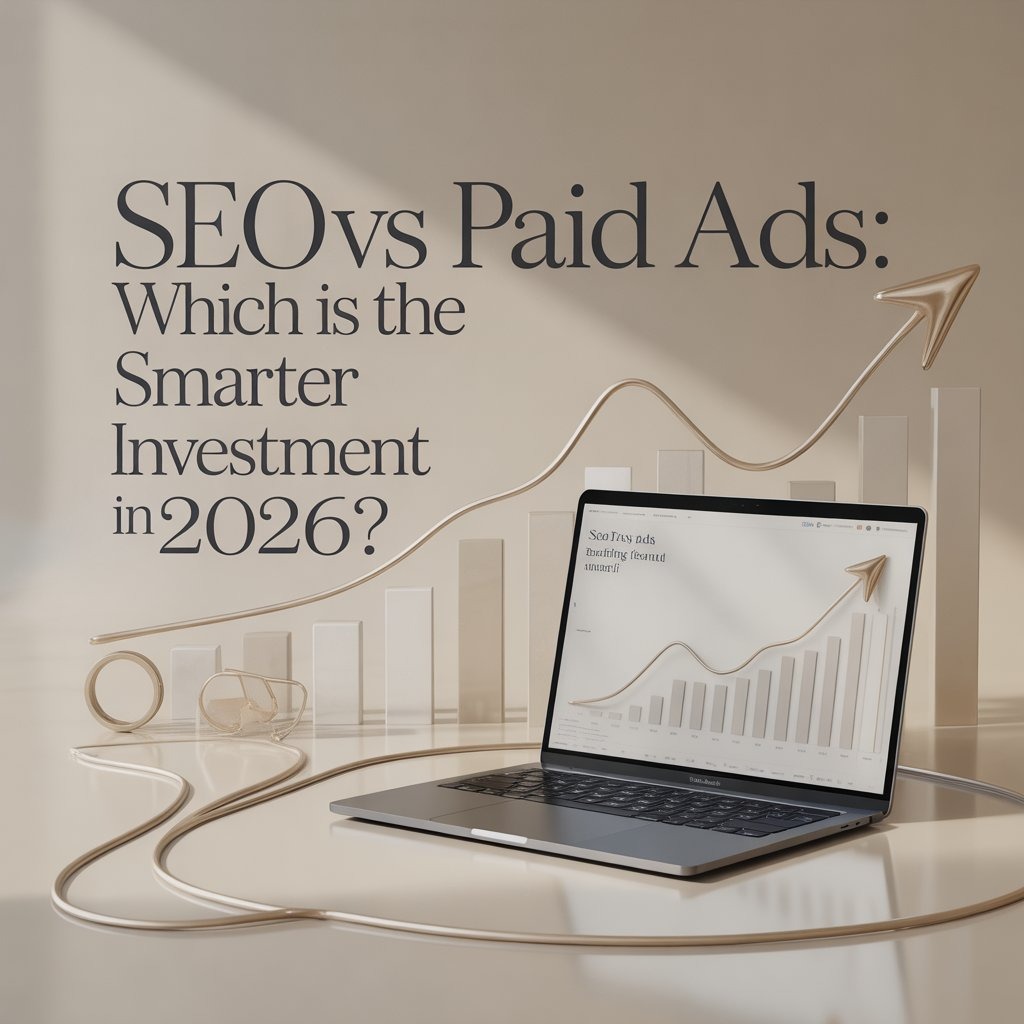
In the fast-evolving digital marketing landscape, businesses are constantly faced with one critical question: SEO vs Paid Ads — which strategy delivers better returns in 2026? As competition intensifies, advertising costs rise, and search engines become smarter, choosing the right marketing investment is no longer optional—it’s essential for growth.
Whether you’re a startup, local business, or an established brand, understanding SEO vs Paid Ads can help you allocate budgets wisely, maximize ROI, and build long-term visibility. In this in-depth guide by Digiphlox, we’ll break down both strategies, compare their benefits, costs, timelines, and help you decide the smartest investment for 2026.
Understanding SEO in 2026
Search Engine Optimization (SEO) focuses on improving your website’s organic visibility on search engines like Google. In the debate of SEO vs Paid Ads, SEO remains a long-term strategy that builds credibility and sustainable traffic.
How SEO Works Today
In 2026, SEO is more advanced than ever. It now revolves around:
- User intent and experience
- High-quality, helpful content
- Page speed and Core Web Vitals
- AI-driven search results
- Local and voice search optimization
When done right, SEO positions your business as a trusted authority—without paying for every click.
Benefits of SEO
When comparing organic and paid strategies, SEO offers several long-term advantages:
- Free, recurring organic traffic
- Higher trust and credibility
- Better long-term ROI
- Strong brand visibility
- Lower cost per lead over time
The biggest strength of SEO is that results compound—traffic continues even when spending slows.
Understanding Paid Ads in 2026
Paid Ads include Google Ads, Meta Ads, LinkedIn Ads, and other platforms where businesses pay for immediate visibility. In the SEO vs Paid Ads comparison, Paid Ads are known for speed and precision targeting.
How Paid Ads Work
Paid advertising allows brands to:
- Appear instantly on top of search results
- Target specific demographics, interests, and locations
- Control budgets and timelines
- Test offers and campaigns quickly
With AI-based bidding and automation, Paid Ads in 2026 are more data-driven—but also more competitive.
Benefits of Paid Ads
Paid campaigns are especially effective for:
- Immediate traffic and leads
- Predictable short-term results
- Ideal for launches, sales, and promotions
- Scalable campaigns
- Precise audience targeting
However, once you stop paying, traffic stops too.
SEO vs Paid Ads: Key Differences Explained
To clearly understand the difference between organic and paid marketing, let’s compare them across essential factors.
1. Cost Structure
- SEO vs Paid Ads shows a clear contrast: SEO requires upfront investment in content and optimization, while Paid Ads require continuous spending per click.
- Paid Ads costs are rising due to increased competition in 2026.
2. Speed of Results
- Paid Ads win in speed.
- SEO takes time (3–6 months) but delivers sustainable growth.
3. Long-Term ROI
In the long run, SEO vs Paid Ads strongly favors SEO:
- SEO delivers compounding returns.
- Paid Ads deliver short-term returns only.
4. Trust & Credibility
Users trust organic results more.
In the SEO vs Paid Ads debate, SEO builds authority, while ads are often skipped.
SEO vs Paid Ads: What’s Smarter for Small Businesses?
For small and medium businesses, SEO vs Paid Ads depends on goals and budget.
- If you need instant leads → Paid Ads
- If you want consistent growth → SEO
In 2026, smart businesses start with Paid Ads for quick traction and simultaneously invest in SEO for stability.
SEO vs Paid Ads for E-Commerce Brands
E-commerce brands face fierce competition. In SEO vs Paid Ads, the best approach is hybrid:
- Paid Ads for product launches and festive sales
- SEO for category pages, blogs, and evergreen products
SEO reduces dependency on ads over time, improving profitability.
SEO vs Paid Ads for Local Businesses
Local businesses benefit heavily from SEO:
- Google Maps optimization
- Local keywords
- Reviews and local citations
In the SEO vs Paid Ads discussion, SEO is often the smarter investment for local visibility, while Paid Ads can boost seasonal demand.
SEO vs Paid Ads in Terms of Conversion Quality
An important aspect of SEO vs Paid Ads is lead quality:
- SEO traffic converts better because users search with intent
- Paid Ads can attract broader audiences but may include low-intent clicks
High-intent organic visitors often lead to higher conversion rates.
SEO vs Paid Ads: Role of AI in 2026
AI has reshaped SEO vs Paid Ads significantly:
- Search engines reward helpful, human-focused content
- Ads platforms use AI for bidding and targeting
SEO now focuses on E-E-A-T (Experience, Expertise, Authority, Trust), while Paid Ads rely on automation—but human strategy still matters.
When Paid Ads Make More Sense Than SEO
Despite SEO’s power, SEO vs Paid Ads isn’t one-sided. Paid Ads are smarter when:
- Launching a new business or product
- Running limited-time offers
- Testing new markets
- Scaling quickly with measurable budgets
When SEO Is the Smarter Investment
In the SEO vs Paid Ads comparison, SEO wins when:
- You want long-term growth
- Budget efficiency matters
- Brand authority is a priority
- You want traffic even when ads stop
SEO vs Paid Ads: The Smart 2026 Strategy
The smartest approach in 2026 is not choosing one over the other—but combining both.
Recommended Budget Split
- 60% SEO (content, technical SEO, backlinks)
- 40% Paid Ads (high-intent keywords, retargeting)
This balanced approach ensures immediate results and long-term dominance.
Final Verdict: SEO vs Paid Ads in 2026
So, which strategy should businesses invest in?
- SEO is smarter for long-term, cost-effective growth.
- Paid Ads are smarter for short-term speed and scalability.
The real winners are businesses that combine both with the right strategy, timing, and expertise.
If you’re confused about SEO vs Paid Ads and want a data-driven strategy tailored to your business goals, Digiphlox can help you dominate search results, lower ad costs, and scale profitably in 2026. Let our experts craft a performance-focused digital marketing plan for you.